
Time Without Passage
The RoomThis flow follows the prisoner’s experience of time as an oppressive force that alternately drags, disappears, and finally loses meaning.
increasing Bearing strength in each event
 decreasing
Bearing strength in each eventdecreasingHours That Must Be Passed
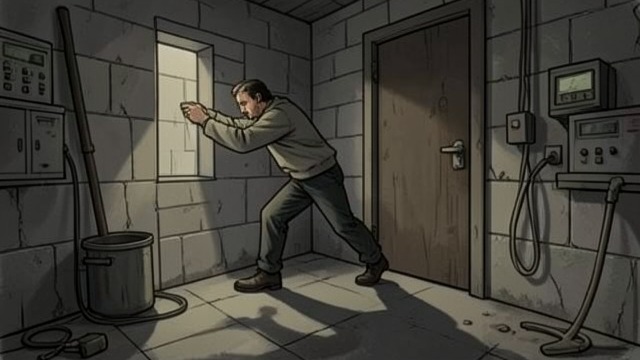
Hours That Must Be Passed
Sleep as a Measure
The Unnamed protagonist tries to understand time by comparing waking hours with sleep. He remembers childhood anticipation before Christmas, when falling asleep seemed to promise morning, and recognizes that the same wish to sleep now is less about rest than escape from waiting.
Time as Pressure
In the cell, hours can feel heavy and prolonged, then collapse into a brief summary after they have passed. His thoughts about astronomers measuring the future turn into anger at the futility of ending up where one started. Time seems not to carry him forward but to return him to the same confinement.
This early meditation makes time a central pressure rather than a neutral backdrop. The prisoner measures his days by the difficulty of enduring them, and sleep becomes an imagined way to shorten what he cannot control.
The Fourteen-Hour Hearing
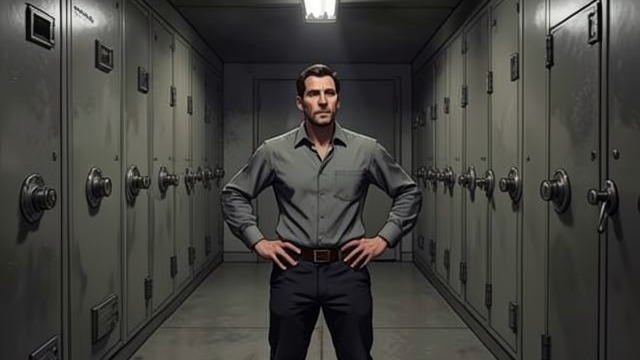
The Fourteen-Hour Hearing
The Day in Retrospect
After returning from the preliminary hearing, the Unnamed protagonist recalls the chain of waiting rooms, transport, courtroom procedure, and holding areas. He knows the process consumed about fourteen hours, but the sequence now fits into only a few minutes of recollection.
Ritual and Futility
The mismatch between duration and memory troubles him. The hearing’s formal exchanges seem to have gone on endlessly at the time, yet become compressed and almost indistinguishable afterward. He compares the proceedings to a ritual that continues because no one stops it, imagining that a decisive interruption could have changed everything.
The episode turns institutional procedure into an experience of distorted duration. The law consumes a day while offering the prisoner little sense of movement or agency, intensifying his conviction that he is trapped in repetition.
Counting Steps and Repeating Days
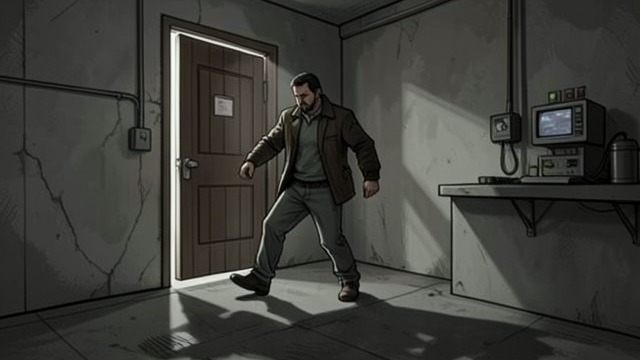
Counting Steps and Repeating Days
A Measured Cell
The Unnamed protagonist paces between the wall and door, counting steps and trying to land each foot in its former place. Repeated counts give the small room a temporary structure, while childhood rhymes and remembered rules about cracks connect each movement to earlier life.
The Loop Takes Over
The steps do not lead anywhere. He cycles between the same surfaces, thoughts, and memories, sometimes treating the routine as a way to keep control and sometimes as another example of life repeating without change. The cell’s boundaries make physical movement resemble the mental return to old grievances.
The repeated walk gives time a visible form: measured, circular, and unable to deliver him elsewhere. As the routine deepens, the difference between purposeful action and compulsive repetition becomes harder to sustain.
The Endless Night of Crisis
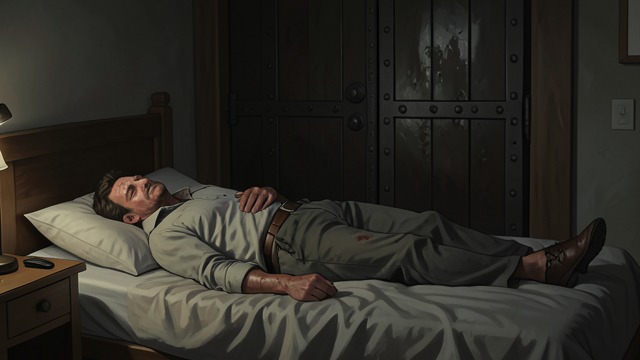
The Endless Night of Crisis
Motionless Time
After his intense fantasy and physical release, the Unnamed protagonist lies exposed on the bed, unable to settle into sleep. He longs for a space without pressure, light, or time, yet his attempt to escape consciousness only produces the sense of lying awake and waiting.
Time Without Evidence
Nothing in the room can reassure him that even seconds have passed. There is no visible change he can hold onto, and the pressure of duration continues without a clear direction. His body becomes the most immediate evidence of distress, with pain and exhaustion keeping him just short of collapse.
The episode brings the novel’s temporal anxiety to an acute point. Time does not merely move slowly; it becomes a condition he cannot verify, leave, or even use as a reliable measure of survival.
The Small Chore of Returning
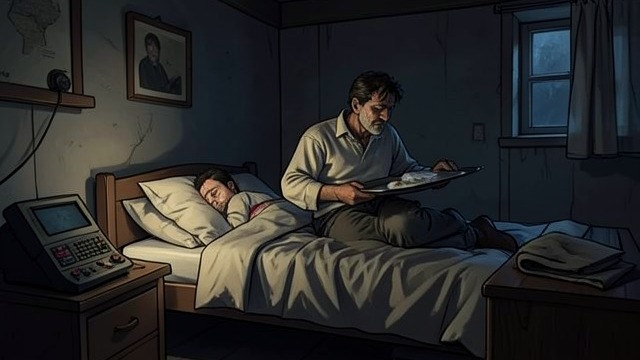
The Small Chore of Returning
A Sequence of Required Motions
During the final breakdown, the Unnamed protagonist experiences getting out of bed, carrying a tray, and returning to the cell as a formidable chain of tasks. Each movement must be completed in order, despite his nausea, weakness, and fear of being seen.
Duration Reduced to Survival
Once back inside, he finds even washing, reaching the bed, and getting under the blanket exhausting. The minutes are no longer tracked through clocks or schedules so much as through the effort required to shift his body from one position to another. The routine offers no larger progress, only the next necessary movement.
By the ending, time has become bodily labor without a promise of renewal. When court time is called, he remains on the bunk, suggesting that even a new external event cannot reliably pull him out of the cycle of waiting and exhaustion.
At the opening, during his first reflections on sleeplessness
After the preliminary hearing, while he reconstructs the day in his cell
During the middle period of confinement, as pacing becomes a routine
After the blasphemous fantasy and sexual climax
During the final vomiting episode, after the cell door opens for chow
